↓↓↓ Click on text to edit! ↓↓↓
A versatile Irish font, calligraphic & modern, designed for Irish streets ☘
Insular and historical letterforms
< Signage >
↘︎ With ↑ons of arro↖︎↗︎s ←
An uncial encounter
During a trip to Ireland, I couldn’t help but notice the remarkable presence of display uncial fonts throughout public spaces. Fascinated by this typographic landscape, I began researching Irish culture and identity – diving into the Irish Revival and exploring the reasons behind Ireland’s bilingual signage seen on roads, buildings, and city streets.
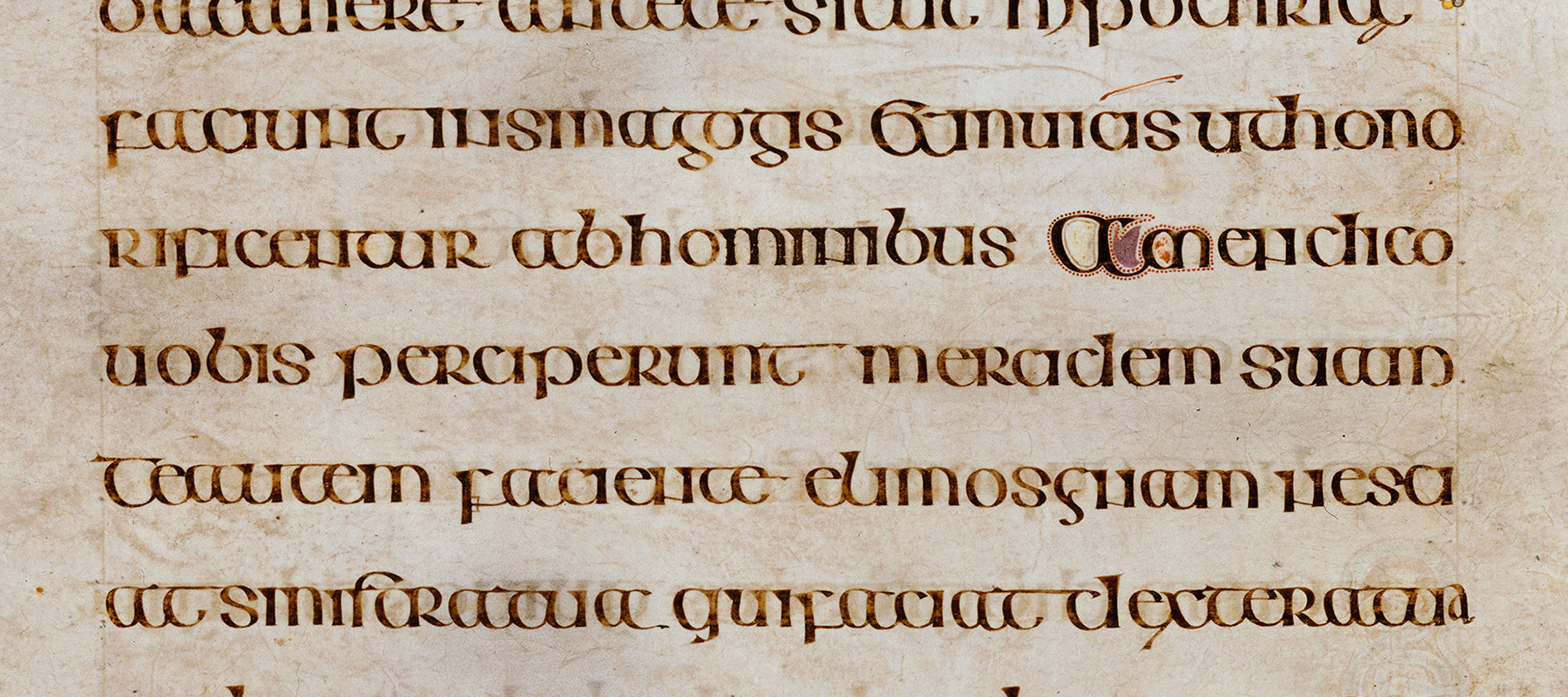
Tracing these uncial letterforms back to traditional Irish half-uncial calligraphy revealed a striking gap between the original models and the contemporary choices visible nowadays across Ireland.
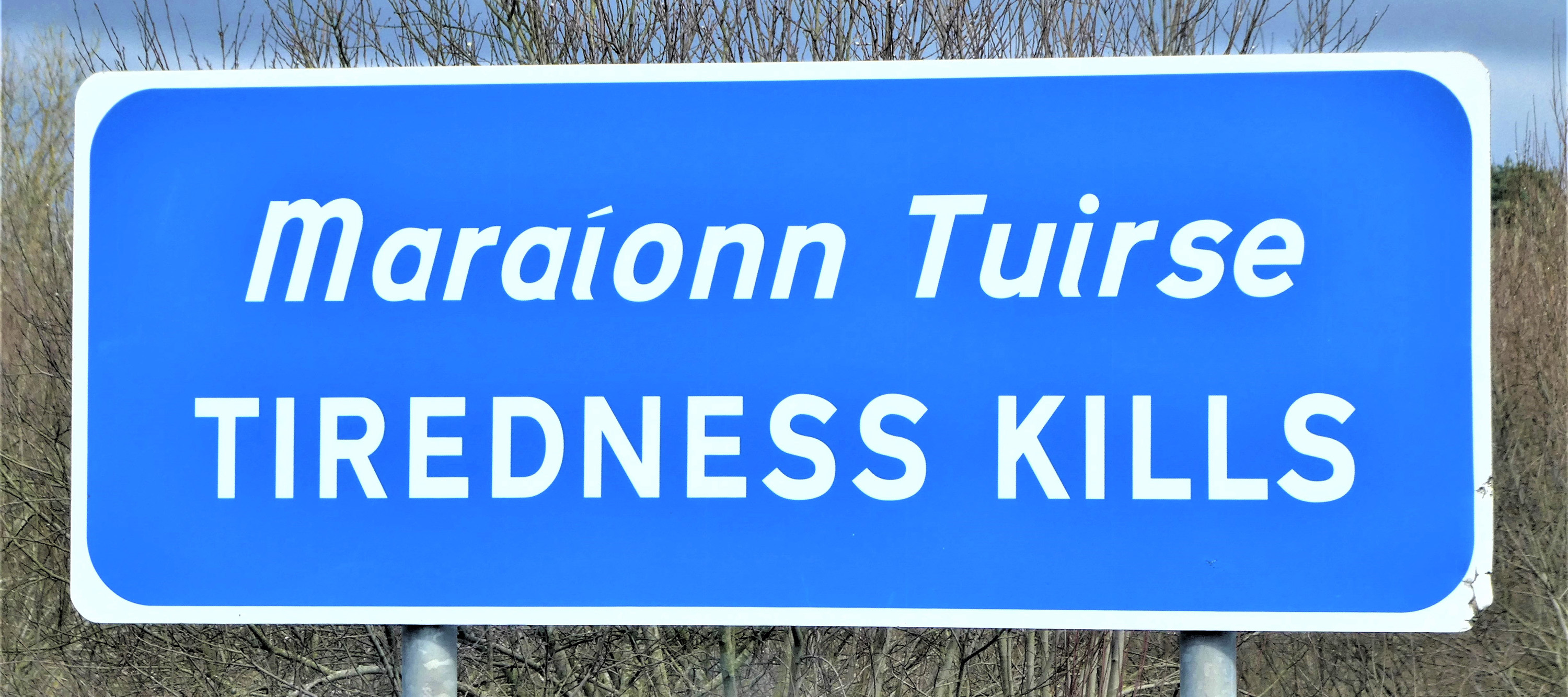
One of the most frustrating example for a type designer might be the Irish motorway signage: an italicized adaptation of the British Transport typeface (England being the very thing Irish fonts once sought to move away from), not-so-subtly adjusted to mimic a calligraphic gesture. Although Irish type design has long sparked debate within the history of the Gaelic League and beyond, I couldn’t resist resolving a type and graphic design issue.
More details on this research are available here!
Type design
This project aims to express Irish identity through alterations of familiar Latin letterforms, without compromising legibility, compatibility with the existing Transport font, or suitability for a wide range of applications and scales.
From a general analysis, several key features emerge that highlight the uniqueness of the insular letter: a relatively large and tall x-height, an overall roundness, triangular serifs, a classic calligraphic contrast axis, and specific letterforms.

Shown above (from left to right) are the classic Irish insular calligraphy, the Liffey font, and the Transport font for reference. The triangular serif is represented by an inclined stroke start, the angle between the leg and the stroke is preserved, and although the leg is straight, the roundness of the Irish half-uncial is conveyed through a curved leg.
More details about the type design process here!
Specimen
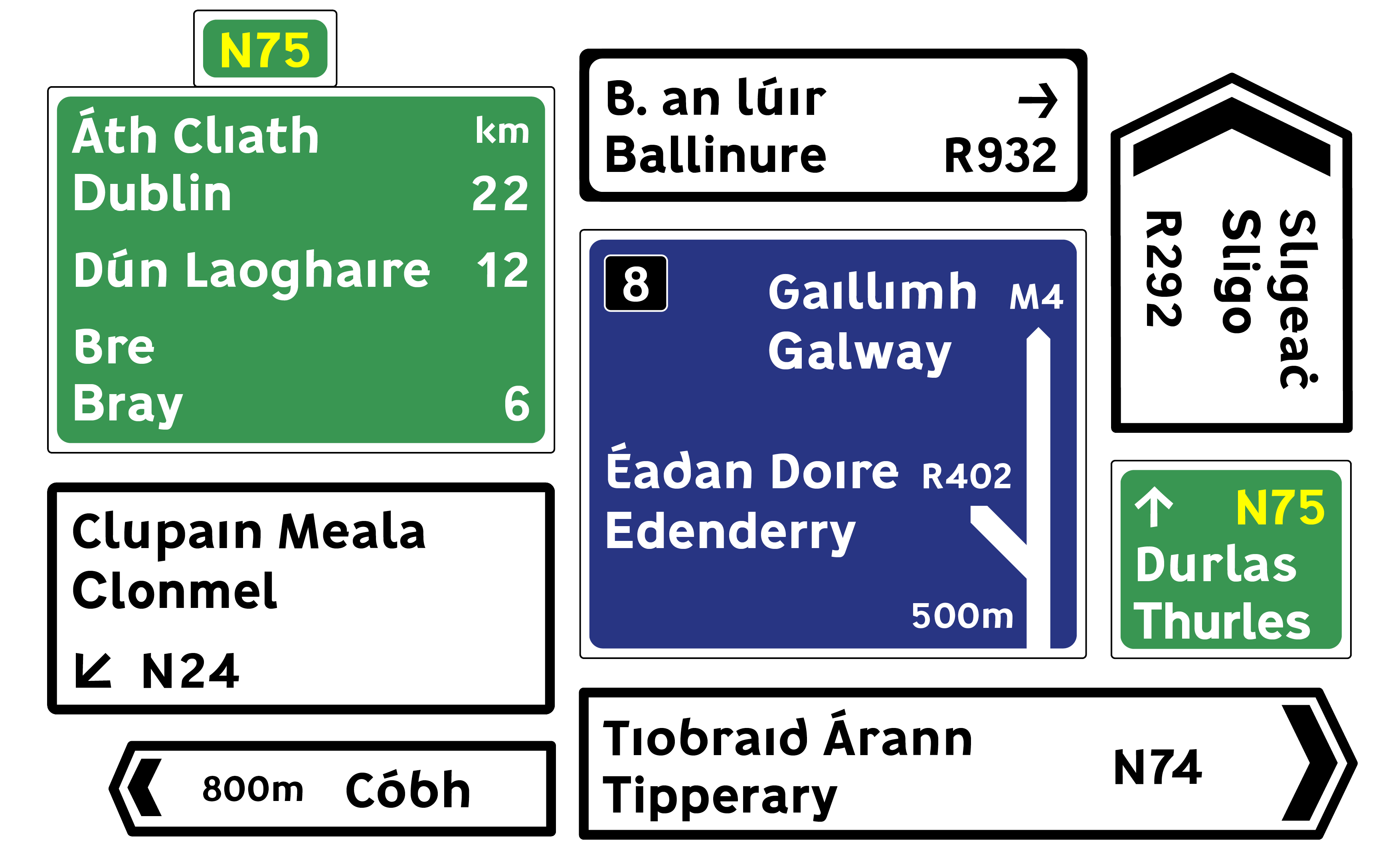
The name liffey comes from the eponymous river that ultimately flows to Dublin Bay. The Irish name is An Life, and historically An Ruirṫeaċ.
< Calligraphy
Letterforms >
The aim is to produce a modern typeface, reminiscent of Irish calligraphy. It is intended to be suitable for a wide range of uses, mainly road signs, but also for body text on government websites or official documents requiring the use of Irish Gaelic for instance. Its primary use for road signage produced letterforms designed to work with existing signs, that are using the british Transport font. Legibility constraints have also obviously been taken into account.
Liffey is available to download for free here! (font still in progress)
A note about alternates
Technically speaking, Irish Gaelic does not have dots on i and j. They are not included in the default set, but stylistic set 03 has them. Stylistic set 01 is for historical alternates, and stylistic set 02 is for the long s and r. Below are the lowercase letters with existing alternates.
a d f g h i j l n r s t default
a d f g h i j l n r s t ss.01
a d f g h i j l n r s t ss.02
a d f g h i j l n r s t ss.03
Images
1. Trinity College. « Book of Kells. Folio 44v: Matthew ». VIII-XIXth c. Vellum. Available online
2. Irish Government and "Mucklagh" (photography). « Sign, M7, Co. Tipperary, Ireland ». 2023. Road signage. Available online
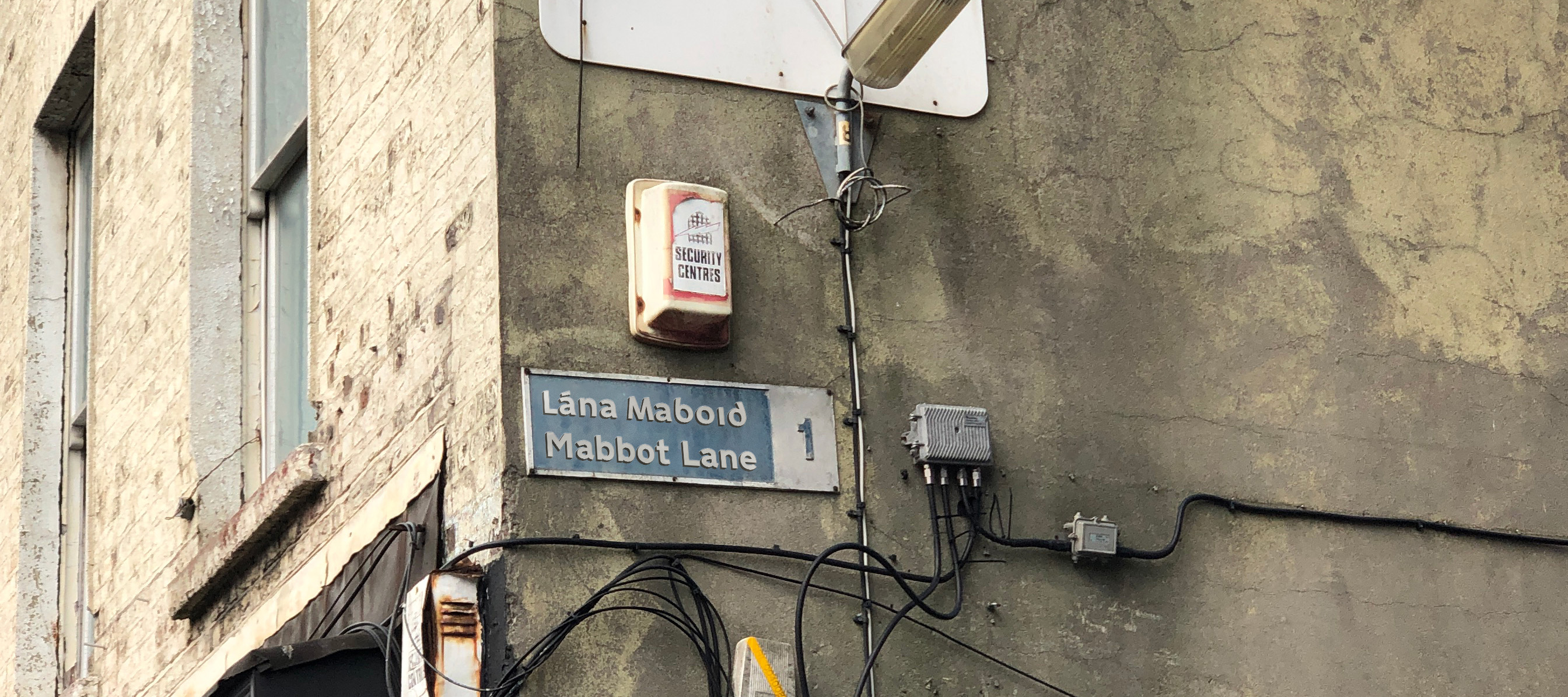
3. Dublin City Council and Luca Arnaud (photography & mockup). « Làna Maboid/Mabbot Lane ». Dublin, Ireland, 2023. Street name plate.